

We spend roughly one-third of our lives sleeping. But sleep is far more than just closing our eyes to rest—it is a complex and vital set of physiological processes that profoundly impact our physical and mental health, cognitive function, and even longevity. Today, we’ll dive into the science behind sleep and how to interpret the "key indicators" that reveal your sleep quality.

1. Sleep Stages: Your Nightly Repair Journey
Sleep is not a single state but a series of repeating cycles, each with unique physiological characteristics and functions. A complete sleep cycle typically includes:
N1 (NREM Stage 1 – Light Sleep): This is the transition phase from wakefulness to sleep. You are easily aroused at this stage, and you may experience slight muscle twitches.
N2 (NREM Stage 2 – Light Sleep): Your heart rate slows down, body temperature drops, and brain activity decelerates, with characteristic "sleep spindles" appearing. This stage accounts for most of the night’s sleep and is crucial for memory consolidation and clearing metabolic waste from the brain.
N3 (NREM Stage 3 – Deep Sleep): Commonly known as "deep sleep" or "slow-wave sleep," this is when the body enters a deep repair mode. Growth hormone is secreted vigorously, and tissue repair, cell regeneration, and immune system strengthening primarily occur here. Waking someone in this stage is extremely difficult.
REM (Rapid Eye Movement Sleep): The most distinctive feature of this stage is rapid eye movement (hence the name). Brain activity becomes highly active, close to wakefulness, while the body’s muscles are temporarily paralyzed—likely to prevent us from acting out our dreams. REM sleep is the primary stage of dreaming and is vital for emotional regulation, learning and memory (especially procedural memory), and creativity.
A healthy sleep pattern involves multiple full cycles from light to deep sleep and then to REM, each lasting approximately 90–120 minutes. Understanding the time you spend in each sleep stage is the foundation of assessing sleep quality. For example, sufficient deep sleep is key to physical repair, while adequate REM sleep is linked to emotional stability and cognitive vitality. Modern health monitoring devices can help you track the distribution of these stages by analyzing your heart rate and movement patterns.

2. Chronotype: Are You an Early Bird or a Night Owl?

Have you ever wondered why some people are full of energy early in the morning, while others don’t "wake up" until the afternoon? This largely depends on your chronotype.
Definition: A chronotype reflects your natural sleep-wake preference—simply put, whether you are inherently an "early riser" (early bird), a "late sleeper" (night owl), or somewhere in between.
Physiological Basis: It is determined by your genes and internal circadian rhythm. The circadian rhythm regulates 24-hour fluctuations in body temperature, hormone secretion (e.g., melatonin), alertness, and other physiological functions.
Types: It is typically subdivided into morning type, mid-morning type, intermediate type, evening type, and night type.
Understanding your chronotype is crucial:
- Respect Your Rhythm: Forcing night owls to go to bed early and rise early, or early birds to stay up late, will lead to "circadian misalignment."
- Health Impacts: Long-term conflict with your chronotype (e.g., night owls forced to rise early for work) has been linked to higher blood pressure, increased inflammation, elevated cardiovascular disease risk, and poorer academic/work performance.
Recognizing your chronotype helps you arrange work, rest, and social activities more rationally, reducing physiological "jet lag" and making sleep more natural and efficient. Advanced health tools can help you identify your chronotype by long-term monitoring of your sleep and activity patterns.
3. Nightly Heart Rate Curve: The Heart’s "Sleep Diary"

Your heart undergoes unique changes during sleep, forming a "heart rate curve" that reflects your body’s recovery status. Paying attention to the pattern of your average nightly resting heart rate (RHR) can provide rich health clues.
Ideal Pattern – The "Hammock" Curve: After falling asleep, your heart rate gradually decreases, reaching its lowest point in the middle of the night (usually early morning, when melatonin levels are high and body temperature is lowest), then rises gently as morning approaches to prepare for waking up. This typically indicates high-quality restorative sleep.
Attention-Worthy Patterns:
- "Downhill" Curve: Heart rate starts high at bedtime and continues to drop to the lowest point in the morning. This may suggest late meals, alcohol consumption, or strenuous exercise before bed, with the body still digesting or recovering overnight—likely leading to grogginess upon waking.
- "Hill" Curve: Heart rate rises instead of falling after falling asleep. This may be due to excessive fatigue, a later-than-usual bedtime, or breathing issues like snoring.
- "Highland" Curve: Heart rate remains consistently high all night. This may indicate the body is under stress (e.g., illness, dehydration, mental strain) and not getting adequate rest.
Tracking your nightly heart rate pattern is like reading your body’s overnight work report, helping you identify recovery-impacting habits (e.g., late eating, late workouts) or potential health signals (e.g., excessive stress).
4. Blood Oxygen Saturation: A Barometer of Nighttime Breathing

Blood oxygen saturation (SpO2) refers to the percentage of oxygen-carrying hemoglobin in the blood. During sleep, especially in deep sleep, muscle relaxation may narrow the upper respiratory tract, restrict airflow, and even cause temporary breathing pauses (sleep apnea)—leading to a drop in blood oxygen levels.
Significance: Persistent or significant drops in blood oxygen not only reduce sleep quality (causing fragmented sleep) but are also linked to increased cardiovascular burden, higher hypertension risk, daytime fatigue, and cognitive decline.
Monitoring Value: Understanding the overall level and fluctuations of nighttime SpO2 is an important window for assessing sleep breathing health (e.g., identifying potential sleep apnea risk).
5. Sleep Breathing Quality & Apnea Events

Related to blood oxygen is the regularity of breathing and the presence of pause events. Snoring is a common sign of restricted airflow; in severe cases, it can progress to Obstructive Sleep Apnea (OSA)—a condition where breathing stops completely for several seconds or even tens of seconds during sleep.
Impacts: OSA causes repeated blood oxygen drops and sleep fragmentation (micro-arousals from deep sleep to resume breathing). Long-term, it harms heart health, increases the risk of various chronic diseases, and severely impairs daytime energy.
Key Concerns: Pay attention to frequent snoring, dry mouth upon waking, and excessive daytime fatigue. Combined with SpO2 monitoring data, these can signal the need for further attention to breathing health.
6. Sleep Duration & Efficiency: Fundamental Yet Critical
While individual variation exists, getting sufficient sleep duration is the foundation.
Sleep Duration: Adults generally need 7–9 hours. More importantly, sleep efficiency—the ratio of actual sleep time to total time spent in bed—matters. High efficiency means falling asleep quickly and spending little time awake at night. Tossing and turning in bed for 8 hours may be less restorative than 7 hours of efficient sleep.
7. Sleep Consistency: Consistency Is King
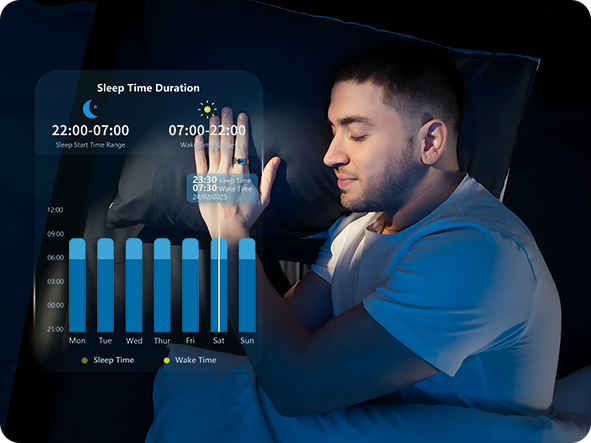
Beyond single-night quality, maintaining a regular sleep schedule is equally important. Going to bed and waking up at roughly the same time every day helps stabilize your circadian rhythm, allowing your body to "predict" sleep, enter efficient sleep more easily, and improve overall sleep quality.

Conclusion: Listen to Your Body’s Nighttime Whispers
Sleep is a complex and sophisticated system. Understanding these key sleep indicators—stage distribution, chronotype, nightly heart rate pattern, blood oxygen levels, breathing quality, duration and efficiency, and sleep consistency—unlocks the door to optimizing sleep and enhancing health. They are like whispers from your body at night, telling us how well we’ve recovered and where adjustments may be needed.
By focusing on these indicators, you can improve sleep habits more targeted: adjust bedtime, optimize pre-sleep activities (avoid late eating/exercise), create a more suitable sleep environment, and seek professional medical help if necessary. Modern technology makes it easier to capture these "whispers," helping us understand ourselves better and embrace a healthier, more vibrant life. Tonight, pay attention to your sleep—it may have more stories to tell about your health.








Share:
Momax CES 2026 Recap: Showcasing Momax Sense Latest Smart Watches & Rings in Las Vegas
The Silent Guardians of Heart Health: Decoding Heart Rate and HRV